|
|
|---|


Showing posts with label Concept Car. Show all posts
Showing posts with label Concept Car. Show all posts


 Companies pulling new automobile designers inorder to get the best out of the fantastic models that can override their competitors we have collected such models which may or may be not released near future. But the concepts and designs in these cars should definitely a new or even some are crazy enough to make you laugh or atleast to make you think deeper about buying these cars




New Modern Design Futuristic 2028 Volkswagen concept car for Future


New Audi A9 Concept Car
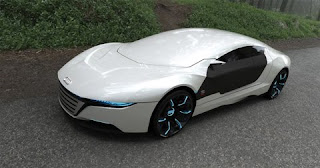
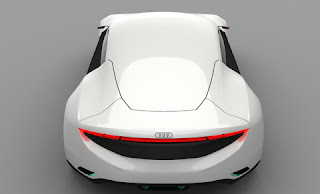
Audi has just released its latest concept design. It is known as the A9 concept and it is unlike anything we have seen in any production car to date. Audi plans to project its A9 concept at a higher standing than its current top dog, the A8. Audi predicts that this concept will be advanced enough to overwhelm first-class luxury models from competitors such as the Porsche Panamera, and the Lamborghini Estoque if ever it will be put into production.
The form and features of the 2010 Audi A9 Concept were motivated in part by the magnificent structural design of Santiago Calatrava’s architecture in The City of Arts and Sciences located in Valencia. Such inspiration can be seen in the smooth, sleek and flowing contours of the vehicle along with its futuristic structure. Calatrava’s constructions seem as if they were taken from centuries in the future, and Audi’s concept emulates the same ideals.
The form and features of the 2010 Audi A9 Concept were motivated in part by the magnificent structural design of Santiago Calatrava’s architecture in The City of Arts and Sciences located in Valencia. Such inspiration can be seen in the smooth, sleek and flowing contours of the vehicle along with its futuristic structure. Calatrava’s constructions seem as if they were taken from centuries in the future, and Audi’s concept emulates the same ideals.
The windshield of this concept car is fully integrated into the roof, and is composed of material using nanotechnology. Note that this technology does not exist at this time, since it is designed to automatically adjust from clear to opaque, change color and repair damage. Changing colors to the preference of the driver is a feature also reserved for the body kit of the A9. This means that at the touch of a button, the car can change from white to black, to red, to blue, etc.
Propulsion for the A9 concept is achieved via a sophisticated fusion between electric-powered motors found in each of the four wheels of the vehicle, working in concurrence with an internal combustion engine using a renewable source of fuel. Once again, such technology does not exist as of yet, but the plans for this vehicle certainly sound fascinating.
Source: http://www.thesupercars.org/
New BMW M1 Concept Car

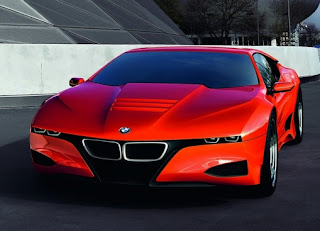
The concorso-e leganza Villa d’Este, Lake Como, in Italy, by BMW, because this is recovery, in 1999, and the German brand has always found space to show an alarming concept car. Sadly, they did not make it into production so far. Star has some mileage award scheme and the concept of Rolls-Royce 101 ex. In this year’s version of events, BMW will pay homage to one of its most important cars, money supply M1, to celebrate 30, 2008. Bavaria, but the company does not intend to only, to create value, it also hope that the current modern interpretation of that super sports car. M1 money supply to meet the concept. With it, traditionally the villa – e ste’s the concept may be about to change.
It is not only against the concept car seems, may have to give it a chance, even in a small scale. New vehicles may also be appropriate to live in a time of its production BMW to a serious thought. Mercedes – Mercedes-Benz has realized it might be a good idea to provide super, when the single-lens reflex camera production ceased in 2009, it has planned to revitalize the gull-wing, is currently testing, the snakes like the body. Audi, and even has given a try, and did not complain r8 sales and brand image of the benefits. So, why BMW will stay out of such a market.
This is obviously no one likes to bet, if there is no chances of winning, therefore, BMW may be waiting to see to see the public response to the M1 money supply to consider production. Expect it to become current in the most important autoshows in the next few years, such as Paris and Frankfurt. In any case, if the requirements of the BMW than any other the warm reception given greenlight to this machine, we believe that thousands of car fans the world would be willing to know what it is.
Source: http://autoworld.wordpress.com/
It is not only against the concept car seems, may have to give it a chance, even in a small scale. New vehicles may also be appropriate to live in a time of its production BMW to a serious thought. Mercedes – Mercedes-Benz has realized it might be a good idea to provide super, when the single-lens reflex camera production ceased in 2009, it has planned to revitalize the gull-wing, is currently testing, the snakes like the body. Audi, and even has given a try, and did not complain r8 sales and brand image of the benefits. So, why BMW will stay out of such a market.
This is obviously no one likes to bet, if there is no chances of winning, therefore, BMW may be waiting to see to see the public response to the M1 money supply to consider production. Expect it to become current in the most important autoshows in the next few years, such as Paris and Frankfurt. In any case, if the requirements of the BMW than any other the warm reception given greenlight to this machine, we believe that thousands of car fans the world would be willing to know what it is.
Source: http://autoworld.wordpress.com/
New Famoust Modern design Futuristic Versa-Quatic concept car
 Amazing Futuristic design Versa-Quatic conept car
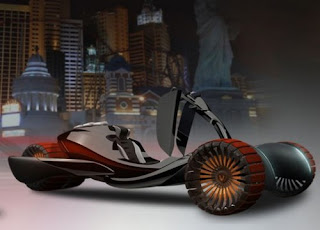
Christopher Lavelanet is the designer of a hot-looking two-seater, powered by an electric engine and a battery pack
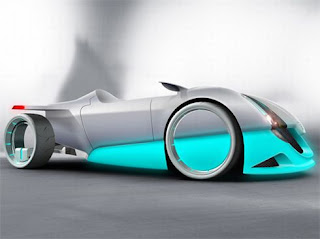
The Versa-Quatic concept car is eco-friendly and allows its drivers to sit in a motorcycle-style position, for an experience you usually get on two wheels. As such, you’ll use your upper and lower body to turn the vehicle, speed it up and even stop this crazy ride. Just don’t lean your bodies in opposite directions, in case there are two drivers running the automobile
Morgan Fuel-Cell Futuristic Concept Car
 Cool Design Morgan Fuel-Cell Concept Car with Picture 1
 Nice Design Morgan Fuel-Cell Concept Car with Picture 2
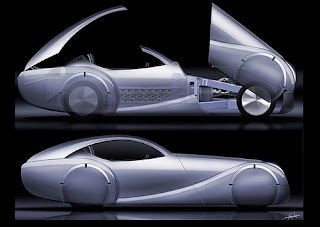
I suppose, these auto shows will never stop surprising us and car creators will never get tired of making new and completely great cars. Have you ever heard about Morgan? Yeah, but apart from a famous fashion apparel brand, it is the traditional British car brand, and it has officially announced that it is going to launch a LifeCar concept, that is a hydrogen-fueled car possessing a wood-frame body. This super car will be presented at the 2008 Geneva Auto Show.

Modern Futuristic Morgan’s car fuel-cell hybrid with Picture 3
 Modern Futuristic Morgan Fuel-Cell Concept Car on Back Body with Picture 4
The hydrogen is converted to electricity using a 4 stack hydrogen PEM fuel cell. Apart from 22 kW of electricity, the fuel cell produces only heat and water as by-products. The fuel cell made by QinetiQ operates at 45% efficiency, a significant advance over the conventional internal combustion engine. Electricity is directed to 4 electric motors/generators, each connected directly to a driving wheel. Not only are these motors super-efficient – 92-94% across their operating range - but they have inbuilt re-generative braking, recapturing the kinetic energy for when vivid acceleration is required (and reducing energy consumption still further). Whilst regenerative braking is not a new concept, current applications offer around 10% energy reuse, whereas in LIFECar, up to 50% of this stored kinetic energy can be re-employed. This regained energy needs to be efficiently stored and delivered. Historically this has been the job of batteries, which are rich in heavy metals, heavy in weight and limited in their ability to deliver or receive high power bursts of energy. LIFECar has shunned these in favour of a bank of ultra capacitors. These have the ability to shuffle up to 1000 amps back and forth, maximising energy storage during braking and delivering powerful acceleration.
 Cute Design Morgan Fuel-Cell Concept Car in Front with Picture 5
The Morgan LIFECar takes a fresh look at transport, offering as revolutionary an approach to personal freedom as did the brilliant Morgan Threewheeler introduced by HFS Morgan nearly 100 years ago. The LIFECar is powered by a fuel cell that is sized to meet the constant load requirement of cruising (about 20% of peakpower) and as a result significant weight and cost reductions have been made over other designs. By recapturing energy during braking, maximum performance is available to LIFECar for acceleration from this unique mix of technologies. The initial concept was the brainchild of Hugo Spowers of RiverSimple, a specialist company investigating new ideas in environmentally sound transport solutions. In order to realise LIFECar however, several partners were needed to make the concept a reality. The project is based around hydrogen as the fuel source because when it burns the only emission is pure water. Hydrogen is potentially abundant and Spowers brought in Linde to the project for their expertise across the whole hydrogen supply chain from production and distribution through to their high pressure refuelling systems.
 Beautiful Design Morgan Fuel-Cell Concept Car with Picture 6
 Luxury Modern Design Morgan Fuel-Cell Concept Car with Picture 7
There is a new model in the Aero range - the Morgan Aero 8 America. Starting price looks like this $115,000 and you will get graphite side scoops, a rear diffuser, and side exit exhausts. As to its interior, we have a deal with full quilted leather. Engine: 4.4-liter BMW
New Famous Modern Futuristic Aptera concept car future
 Modern design Aptera futuristic concept car with image 1
The Aptera is one hell of a cool car. Always love it when style and philosophy come together. The future’s definitely bright if it’ll make such kinds of designs common.
 Modern design Aptera futuristic concept car with image 2
The Aptera (Greek for “wingless”) is an environmentally-friendly car that’s as clean and green as it is fantastically futuristic. The three-wheeled hybrid, which offers an all-electric or plug-in hybrid option, isn’t just a concept- you can reserve your own with just a $500 deposit.
 Modern design Aptera futuristic concept car with image 3
 Modern design Aptera futuristic concept car with image 4
 Modern design Aptera futuristic concept car with image 5
Modern Design F-Cell Roadster Hybrid Mercedes-Benz Concept Car
 Modern Design F-Cell Roadster Hybrid Mercedes-Benz Concept Car
Mercedes-Benz has been toying with alternative-energy prototype vehicles for awhile now, the obviously conceptual F-CELL Roadster hearkens back to M-B vehicles of old, though the engine is far from retro.
 Simple Modern Design F-Cell Roadster Hybrid Mercedes-Benz Concept Car
Times may be tough, but that isn't stopping Daimler from having a bit of expensive-looking fun with its trainees... so long as there's an educational bent to it. What you see before you isn't an artful series of renderings, it's an actual time-warping fuel cell concept dubbed "F-CELL Roadster."It took a year and more than 150 trainees to create, but the entire project involved using "junior employees", giving the company's up-and-coming employees a creative way to learn how alternative-fuel systems come together.The F-CELL Roadster marries Benz Patent Motor Car stylings with 21st century tech wonderfully, including that legendary vehicle's general aesthetic and proportions, along with old-meets-new technologies like carbon-fiber buckets capped in hand-stitched leather and a drive-by-wire central control joystick.The centerpiece, of course, is the Roadster's fuel cell powertrain, which has a power rating of 1.2 kilowatts, a top speed of 25 kilometers-per-hour, and a range of 350 kilometers. That means you'll have a long, slow trip, just like those adventuring motorists back at the turn of the century. Official press release posted after the jump.
 Design Interior F-Cell Roadster Hybrid Mercedes-Benz Concept Car
 Cool Design F-Cell Roadster Hybrid Mercedes-Benz Concept Car
The F-CELL Roadster built by apprentices at the Mercedes-Benz plant in Sindelfingen covered a section of the historic route taken by Bertha Benz on the past weekend. Starting in Mannheim, the fuel cell powered car was driven via Ladenburg and Heidelberg. The symbolic passing of the finish line was at the chemist’s shop in Wiesloch, where Bertha Benz stopped to refuel during the first long-distance journey in automobile history in 1888. “This trip by the F-CELL Roadster is symbolic of the current change taking place in automobile engineering”, says Dr. Thomas Weber. “At that time Bertha Benz was not yet able to purchase the petrol she needed at a filling station, and for emission-free mobility we are also dependent on the widespread distribution of fuels for the future – electric power and hydrogen. But just as Bertha Benz refused to be discouraged by inconveniences in her day, we are just as determined to help ensure that these technologies achieve their breakthrough.” Before the end of this year, Mercedes-Benz will commence small-series production of the B-Class with a fuel cell drive system. At the end of 2009 the first examples of the smart fortwo electric drive model will also leave the production line to enter service in the “e-mobility Berlin” project early next year.
 Cool Design F-Cell Roadster Hybrid Mercedes-Benz Concept Car
Developed by 150 trainees of Daimler AG at the Sindelfingen Mercedes-Benz plant, the F-Cell Roadster is being claimed as a unique blend of art and technology. As an allusion to the Benz Patent Motor Car from the late 1880s, the car is fitted with a hybrid drivetrain and spoked wheels.
Powered by a 1.2KW hybrid drive, the car is capable of hitting a top speed of 15 mph and an operating range in excess of 210 miles. Of course the car won’t be the fastest to get off the blocks, but the design and the features do display the feasibility of tweaked historic cars in today’s modern era.
 F-Cell Roadster Hybrid Mercedes-Benz Concept Car with Gallery Picture
 Nice F-Cell Roadster Hybrid Mercedes-Benz Concept Car
The F-CELL Roadster uniquely combines state-of-the-art technologies with the history of vehicle construction. As an allusion to the Benz Patent Motor Car from 1886, the vehicle is fitted with large spoked wheels. Moreover, the F-CELL Roadster incorporates stylistic elements from diverse eras of automotive history, such as the carbon-fiber bucket seats with hand-stitched leather covers and the distinctively styled fiberglass front section, based on the component from the Formula One racing bolides. The F-CELL Roadster is controlled with drive-by-wire technology, and a joystick takes the place of a conventional steering wheel. The vehicle is powered by the emission-free fuel cell system located at the rear. With a power rating of 1.2 kW the F-CELL Roadster reaches a top speed of 25 km/h and has an operating range of up to 350 km.
New Famous Design Futuristic Naro and Clever Concept Car
 Simple Design Futuristic Naro and Clever Concept Car
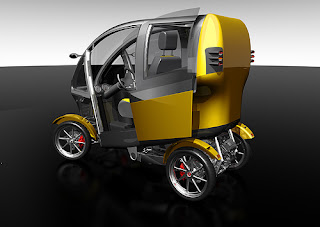
The British company Prodrive envisioned a new concept for a vehicle with an enclosed body and the width of a motorcycle. Its concept Naro however has four wheels and works with a tilting mechanism to prevent it from tipping over in curves in the road.
 Beauty Naro Design Futuristic Naro and Clever Concept Car
Naro: "NARROW CITY VEHICLE" is a city vehicle designed to diminish the traffic congestion and pollution in urban areas. With its narrow body, the four-wheeled Naro is able to drive through traffic congestions much in the same way as a motorcycle. The two passengers sit behind one and another in the fully enclosed body, which offers a passive safety level comparable to a small modern passenger car. The front-positioned driver however sits higher above ground level and therefore has a better view over the road.
 Cool Design Futuristic Naro and Clever Concept Car
A conventional four-wheeled vehicle with a similar narrow track and high centre of gravity would tend to fall over sideways when turning at high speeds. To avoid this problem, the Naro is equipped with a carving mechanism which makes all four wheels and the body tilt sideways during cornering. The amount of tilt during cornering depends on the driving speed.
 Modern Design Futuristic Naro and Clever Concept Car with Yellow Color
 Prodrive envisions various applications for the Naro, including a passenger vehicle, city taxi and delivery vehicle. The company has completed a first prototype and is conducting road-tests during 2006.
 Amazing Design Futuristic Naro and Clever Concept Car
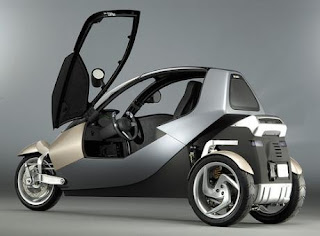
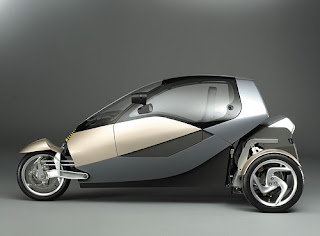
Another enclosed motorcycle concept is in development by a European consortium, on initiative of the Technical University in Berlin, Institute for Motor Vehicles. This three-wheeled vehicle, named CLEVER (Compact Low Emission Vehicle for Urban Transport), is designed as a city vehicle for two people, which requires little space, has a low weight, a low fuel consumption and low emissions.
 Simple Design Naro and Clever Concept Car
The CLEVER (Compact Low Emission Vehicle for Urban Transport) is a compact city vehicle for two people, which requires little space and has a low weight. In turn, the vehicle requires just a small engine in order to reduce fuel consumption and exhaust emissions. The CLEVER is under development by a European consortium, on initiative of the Technical University in Berlin, Institute for Motor Vehicles. In 2006 a prototype vehicle was built by the University of Bath in Great Britain.
 Design Futuristic Naro and Clever Concept Car
he two occupants sit behind one another in the streamlined, narrow cabin. To prevent the danger of tipping over, the cabin of the vehicle is designed to tilt when cornering. The CLEVER is driven by a single-cylinder engine of 230 cc displacement, running on natural gas.
TECHNICAL SPECIFICATIONS:
DRIVE SYSTEM:
Direct drive with single-cylinder 230 cc engine
POWER OUTPUT: 12.5 kW (17 hp) @ 8,600 rpm
FUEL: Natural gas
FUEL CONSUMPTION: 2.4 l / 100 km (98 mpg US)
ACCELERATION 0 – 60 KM/H (37 MPH): 7.0 sec.
MAXIMUM SPEED: 100 km/h (62 mph)
TECHNICAL SPECIFICATIONS:
DRIVE SYSTEM:
Direct drive with single-cylinder 230 cc engine
POWER OUTPUT: 12.5 kW (17 hp) @ 8,600 rpm
FUEL: Natural gas
FUEL CONSUMPTION: 2.4 l / 100 km (98 mpg US)
ACCELERATION 0 – 60 KM/H (37 MPH): 7.0 sec.
MAXIMUM SPEED: 100 km/h (62 mph)
Subscribe to:
Posts (Atom)


